
Leiditech TVS and fuse help DDR5 R-DIMM modules meet the new electrostatic requirements of JEDEC
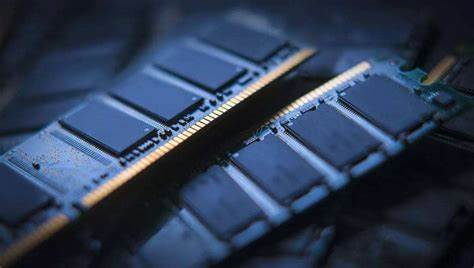
DDR (Double Data Rate, double data rate) is a high-performance memory technology widely used in computers and electronic devices. DDR is mainly applied in computer systems, mobile devices, temporary storage and high-speed data transmission in embedded systems. Therefore, DDR is a core component of modern computing and mobile systems.
With the explosion of AI and big data applications, the high bandwidth (such as 5600 MT/s) and large capacity (32GB) of DDR5 R-DIMM will become key advantages, especially when training large models or processing real-time data, which can significantly reduce latency. But JEDEC has put forward some new requirements for DRAM.
一、JEDEC's requirements for static electricity on DRAM PCBS
JESD625C Standard 4: In response to the requirements for handling electrostatic discharge sensitive (ESDS) equipment, this standard provides a series of protective measures and management processes. For DRAM PCBS, the relevant requirements include:
l Static discharge control measures: During production, transportation and use, measures such as anti-static packaging, the use of anti-static workbenches, wrist straps and anti-static shoes are required to reduce the potential damage of static electricity to DRAM PCBS.
The establishment of the work area: It is necessary to set up an electrostatic control area, clearly defining, marking and managing the ESD-sensitive and non-sensitive areas.
Design suggestion: Encourage designers to incorporate ESD protection mechanisms, such as electrostatic diodes, in circuit design to enhance the circuit board's resistance to electrostatic discharge.
The JESD22-C101F standard is used to evaluate the tolerance of microelectronic components such as DRAM PCBS when encountering electrostatic discharge.
The JESD22-A114 standard specifies the test methods and requirements for electrostatic discharge in human body models (HBM) for integrated circuits and components; the JESD22-A115 standard specifies the test methods and requirements for electrostatic discharge in diffusion models (CDM). These standards regulate and provide test guidance on the electrostatic discharge situations that DRAM PCBS may face from different perspectives.
With the development of technology, some new DRAM PCB designs have adopted more advanced protection measures. For example, the DDR5 R-DIMM module made of 16-layer PCB that Gach is developing has added transient voltage suppressor TVS diodes and fuses to enhance overcurrent protection and prevent electrostatic discharge. This also reflects the role of the JEDEC standard in promoting the industry to adopt more reliable protection technologies.
二、The safety of Leiditech Zhu Xing DDR5 R-DIMM module
To prevent transient voltage and electrostatic discharge (ESD), the R-DIMM module directly obtains a 12V voltage input from the motherboard. Therefore, an advanced protection mechanism is required. Leimao equips each module with high-quality transient voltage suppression (TVS) diodes and SMT fuses. The dual protection mechanism ensures that the module has outstanding durability and long-term stable performance.
The scheme diagram is as follows:

四. Selection and recommended models of TVS Diodes for DDR5 R-DIMM
TVS selection: The reverse cut-off voltage (VRWM) of the ESD protection device should be slightly higher than the power supply voltage of the R-DIMM, and the pulse endurance capacity can be selected to be a bit larger.
TVS placement: The TVS should be placed close to the power input interface to ensure that the ESD current is preferentially discharged to ground through the TVS. TVS is placed at the front end of the filter inductor to prevent the inductor from hindering the discharge of ESD current. Use short and wide cables to connect the TVS to the power/ground. The ground plane is intact, avoiding division, and multi-point grounding is adopted to reduce impedance.
The following lists the TVS diodes used for conventional DDR5 power supply voltages. They have relatively high power, large transient current absorption (IPP), and can effectively suppress transient voltages and ESD static electricity.
|
power Supply protection |
Part Number |
IEC61000-4-2 (Air)/(Contact) |
Power(V) |
Vrwm (V) |
VCmax@A |
Ir(uA) |
Features |
Package |
|
|
|
|
|
|
|
|
|
|
|
5V |
ESDA05CP30 |
±30kV/±30kV |
60 |
3.3 |
7.2V@8A |
0.1 |
1CH,Bi |
DFN1006 |
|
|
PTVS0542H100 |
±30kV/±30kV |
1200 |
5 |
12V@105A |
0.5 |
1CH,Bi |
DFN1006 |
|
|
SD05CW |
±30kV/±30kV |
600 |
5 |
15V@40A |
10 |
1CH,Bi |
SOD-323 |
|
|
SD0581D3W |
±30kV/±30kV |
1425 |
5 |
15V@95A |
0.5 |
1CH,Bi |
SOD-323 |
|
|
ESDA05CC |
±30kV/±30kV |
350 |
5 |
20V@20A |
1 |
1CH,Bi |
SOD-523 |
|
12V |
SDA1211CDN |
±30kV/±30kV |
150 |
12 |
19V@8A |
0.2 |
1CH,Bi |
DFN1006 |
|
|
SD1271P6W |
±30kV/±30kV |
1500 |
12 |
25V@64A |
0.1 |
1CH,Uni |
DFN1610-2
|