
Vehicle end EVCC static surge protection
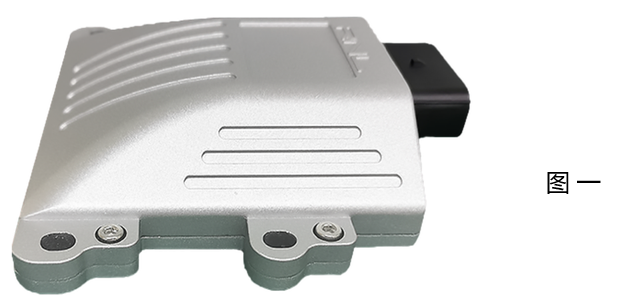
The full name of EVCC is Electric Vehicle Communication Controller, and its Chinese name is Electric Vehicle Charging Communication Controller. It is one of the essential automotive parts for exporting national standard electric vehicles. As shown in Figure 1.
1、 Why do national standard electric vehicle exports need to be equipped with EVCC
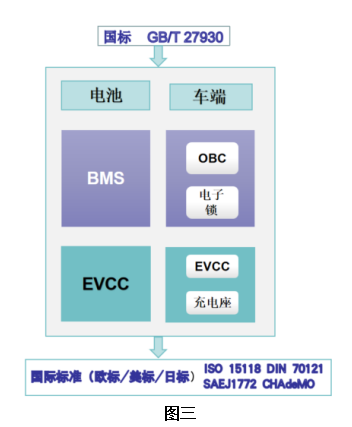
There are multiple charging standards in the global electric vehicle market, such as GB/T 27930 in China, DIN 70121 and ISO 15118 in Europe, SAE J1772 in the United States, and CHAdeMO in Japan. These standards have differences in communication protocols, voltage levels, charging interfaces, etc., which can result in the inability of national standard electric vehicles to be directly charged on overseas charging stations after export. The charging standards of various countries are shown in Figure 2.

2、 EVCC function
Due to the inability of national standard electric vehicles to be directly exported abroad, they need to be equipped with EVCC to establish communication with foreign charging stations. EVCC is an important controller in the charging process of electric vehicles, serving as a communication bridge between electric vehicles and charging stations. Its main function is to convert the communication protocol of electric vehicles into a protocol that the charging station can understand. Realize communication, power transmission control, and data exchange between electric vehicles and charging systems. And EVCC can monitor the battery capacity of electric vehicles, control charging power and charging time, and record data for subsequent analysis and management. As shown in Figure 3.
3、 How to convert national standard electric vehicles into European and American standards through EVCC
As shown in Figure 3, work needs to be done from both hardware and software parts
1) Hardware part:
The first option is to replace it with a European or American standard charging dock.
The second is to add an EVCC charging communication controller.
2) Software section:
EVCC needs to interact with BMS to convert the national standard CAN communication into PLC communication that complies with overseas standards.
In this way, when Chinese electric vehicles are exported to markets such as Europe and America, by installing EVCC, electric vehicles can effectively communicate with local charging stations, which not only reduces costs but also accelerates the internationalization process of electric vehicles.
4、 EVCC hardware components
Simply put, it consists of five modules: microprocessor, power module, communication module, sensor, safety protection circuit, etc.
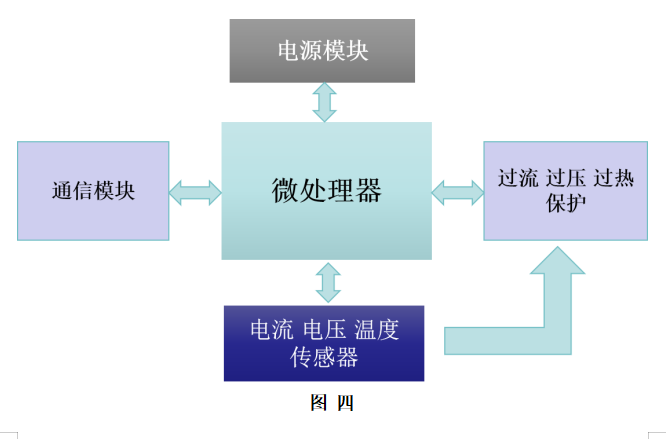
1) The microprocessor is the core of EVCC, responsible for controlling the operation of the entire system.
The microcontroller receives and processes information to control various parameters during the charging process. And various parameters during the charging process are monitored in real-time through sensors. If any abnormal situations are found, protective measures are immediately taken to ensure the safety of the charging process.
2) Power module
Mainly provide safe and stable power supply for the rectification of EVCC.
3) Communication module
The communication module is responsible for the communication between EVCC, charging stations, and other systems of the vehicle. It mainly includes the following aspects: protocol parsing, data transmission, signal modulation and demodulation.
4) Sensor module
Sensors are used to monitor various parameters during the charging process, providing real-time status information to microprocessors, including current sensors, voltage sensors, temperature sensors, etc.
L Safety protection circuit
The safety protection circuit is used to ensure the safety of the charging process and prevent abnormal situations such as overcurrent, overvoltage, and overheating from causing damage to the vehicle and charging equipment.
5、 Does EVCC require electrostatic surge protection
Yes, it is necessary for the following reasons:
1. Electrostatic hazard: EVCC may be affected by electrostatic discharge. Electrostatic discharge may damage electronic components and cause equipment failure.
2. Surge risk: Surge phenomena such as lightning strikes and power grid fluctuations may occur in electrical systems. These surges may cause serious damage to EVCC.
To protect EVCC, we need to take the following measures:
Using electrostatic protection devices such as TVS diodes, varistors, etc., can effectively absorb electrostatic discharge and surge energy.
Good grounding design: Ensure that the EVCC has a good grounding to guide static and surge currents to the ground.
6、 How to choose the appropriate EVCC electrostatic surge protection device
Shanghai Leimao EMC recommends considering the following aspects when selecting suitable electrostatic surge protection devices:
1. Understand protection needs
(1). Determine the protected object: Clearly identify which parts of the EVCC need to be protected, such as microprocessors, communication interfaces, power circuits, etc. Different protection objects may have different requirements for electrostatic surge protection devices.
(2). Analyze potential threats: Consider possible sources of static electricity and surges, such as human electrostatic discharge, power fluctuations, lightning strikes, etc. Understand the characteristics of these potential threats, including voltage amplitude, current magnitude, rise time, etc., in order to select protective devices that can effectively respond to these threats.
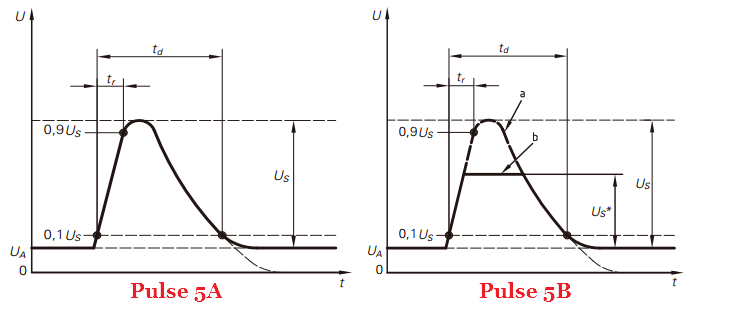
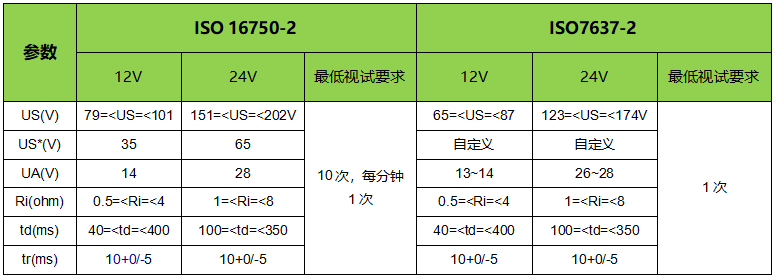
(3). Determine protection level: Determine the required electrostatic surge protection level based on relevant certification standards and specifications. For EVCC, testing is generally conducted with reference to ISO16750-25B and ISO7637-25B. The following is a table of test waveforms and parameter settings.
2. Choose the appropriate type of protective device
Analyze from the perspectives of signal lines and power supply
(1) The selection of signal protection electrostatic discharge (ESD) protection devices should consider:
-ESD diodes require characteristics such as low junction capacitance and low leakage current, making them suitable for electrostatic protection in high-speed communication interfaces. For example, Shanghai Leimao SMC24 can be selected for the CAN interface.
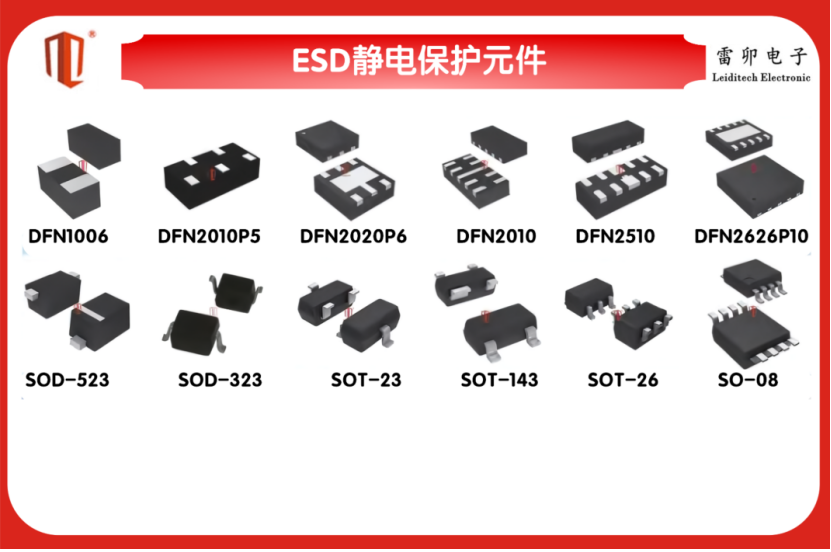
-Polymer ESD suppressor: With advantages such as small size, light weight, and low junction capacitance, it is suitable for applications with limited space. Please refer to the following diagram for the package size.
(2) Power surge protection device:
Traditional solutions generally choose MOV, GDT, and TVS for surge protection. The disadvantage is that MOV and GDT devices are prone to loss and have high residual voltage.
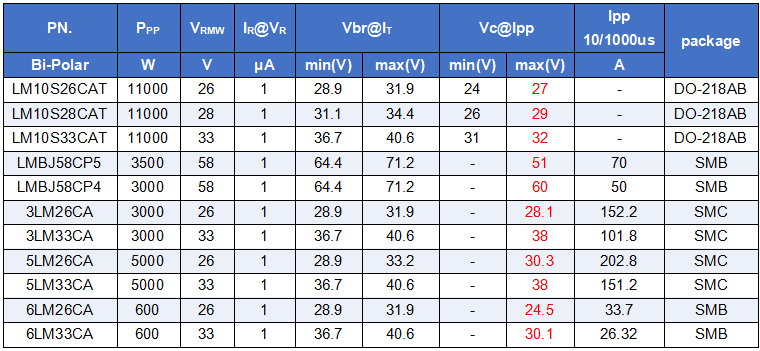
Shanghai Leimao's new high-power sweep back surge protection TVS suitable for vehicles has a low residual voltage that can effectively protect the rear circuit. As shown in the table below, there are several conventional TVS with high power and low residual voltage from Shanghai Leimao.
The following table compares several ordinary TVS with low residual voltage TVS
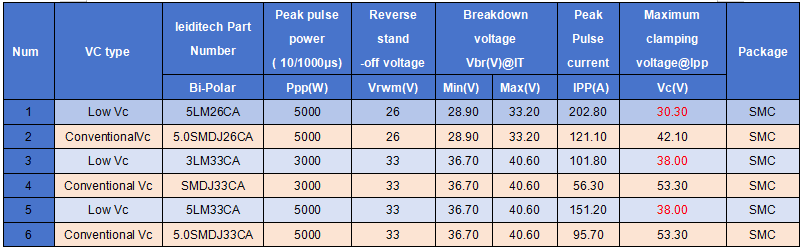
1, 3, and 5 are new low residual voltage TVS, while 2, 4, and 6 are ordinary TVS with the same Vrwm voltage and power.
From the above parameter comparison, it can be seen that VC is much lower than ordinary.
3. Consider key parameters
(1). Working voltage: The working voltage of the selected protective device should be higher than the normal working voltage of the protected circuit, but not too high, so as not to affect the protection effect.
(2). Clamping voltage: Clamping voltage refers to the level at which the protective device clamps the voltage when a surge occurs. The lower the clamping voltage, the better the protection effect on the protected circuit. But the clamping voltage should not be too low to avoid affecting normal operation.
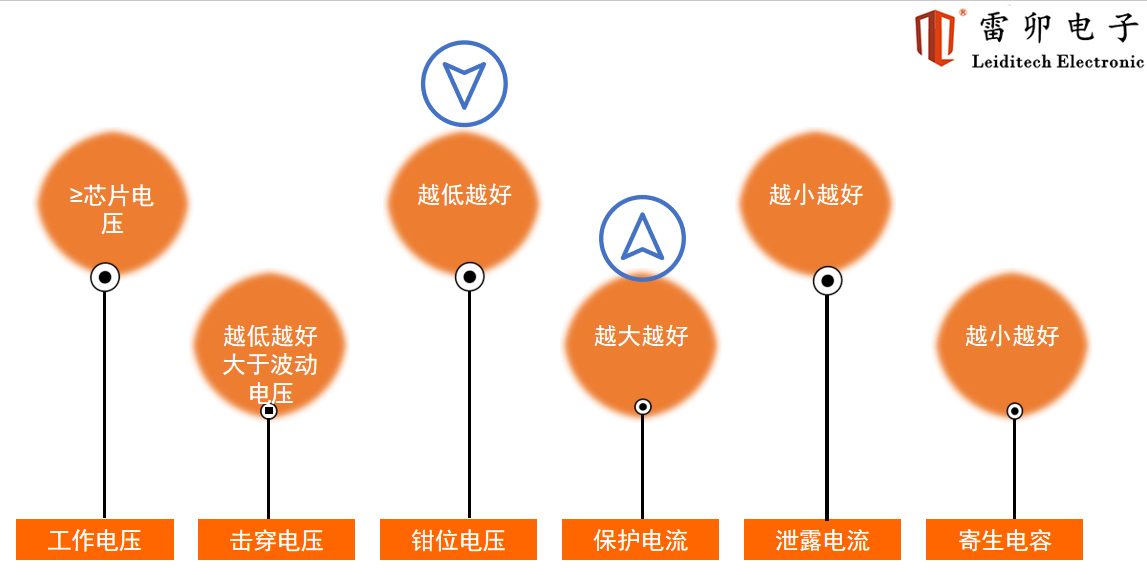
(3). Current capacity: Current capacity refers to the maximum current that a protective device can withstand. Protective devices with sufficient current carrying capacity should be selected based on the potential surge current to ensure effective protection of the protected circuit in the event of a surge.
(4) Response time: Response time refers to the time from the detection of surge to the start of protective function of the protective device. The shorter the response time, the better the protection effect on the protected circuit. For high-speed communication interfaces and voltage sensitive electronic devices, protective devices with extremely short response times should be selected.
(5). Capacitor: For high-speed communication interfaces, the capacitance of protective devices should be as small as possible to avoid affecting the quality of signal transmission.
4. Reference reliability and brand factors
(1). Reliability: Choose protective devices with high reliability to ensure stable protection during long-term use. You can refer to factors such as quality certification of protective devices, manufacturer's reputation, and product failure rate.
(2). Brand and supplier: Choose well-known brands and reliable suppliers to ensure product quality and after-sales service. You can choose suitable brands and suppliers by consulting product reviews, industry experts, and referring to the experiences of other users.
Shanghai Leimao is committed to providing customers with high-quality products to protect circuits from electrostatic interference and voltage fluctuations. Lei Mao has an experienced R&D team that can provide personalized customized services according to customer needs and provide customers with the highest quality solutions.
5. Conduct actual testing and verification
Testing in actual application environment: After selecting the protective device, it should be tested in the actual application environment to verify its protective effect. It is possible to observe whether the protective device can effectively protect the protected circuit by simulating electrostatic discharge and surge situations.
In summary, selecting appropriate electrostatic surge protection devices requires comprehensive consideration of protection requirements, device types, key parameters, reliability, and brand factors, as well as actual testing and verification to ensure effective protection for EVCC.
In fact, for other electronic products, we can also follow the same method and steps to choose suitable electrostatic surge protection devices.
If you need to learn or exchange more information on electrostatic surge protection, please contact EMC.