
By LEIDITECH | 07 June 2023 | 0 Comments
Functional modules and electrostatic surge protection of battery management system BMS
The Battery Management System (BMS) is a key component used for monitoring, controlling, and protecting lithium-ion batteries. The following is a specific distribution diagram of the battery management system functions:
Battery Monitoring Unit (BMU): responsible for monitoring key parameters such as voltage, current, and temperature of the battery pack. It usually includes multiple voltage sensors, current sensors, and temperature sensors, and converts the sensor signal into a digital signal through an analog-to-digital converter.
Cell Balancing Control Unit: used to solve the voltage difference problem between individual batteries in a battery pack. It monitors the voltage of each individual battery and transfers the charge of the high-voltage individual battery to the low-voltage individual battery by controlling the switch or adjusting the current to achieve battery balance.
Charge/Discharge Control Unit: responsible for controlling the charging and discharging process of the battery to ensure that charging and discharging operations are carried out within a safe range. It controls the charging and discharging current and voltage based on the information provided by the battery monitoring unit, and adjusts the charging and discharging strategies according to needs.
Temperature Management Unit: monitors the temperature of the battery pack and takes corresponding measures based on temperature changes. It can control fans, heaters, or cooling systems to maintain the temperature of the battery pack within a safe range.
Fault Diagnosis and Safety Protection Unit: responsible for detecting battery pack faults and taking corresponding safety protection measures. It can monitor abnormal situations such as overvoltage, undervoltage, overcurrent, and overheating of the battery pack, and protect the safety of the battery and system by disconnecting circuits or triggering alarms.
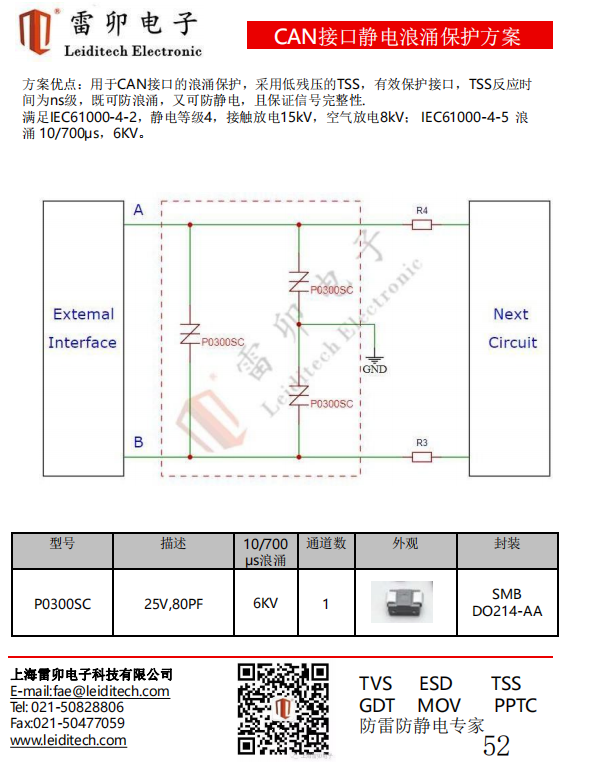
Communication Interface Unit: Used for communication with external systems, such as data exchange and command transmission with vehicle control systems or energy management systems. It can support various communication protocols, such as CAN bus, LIN bus, or serial communication interface.
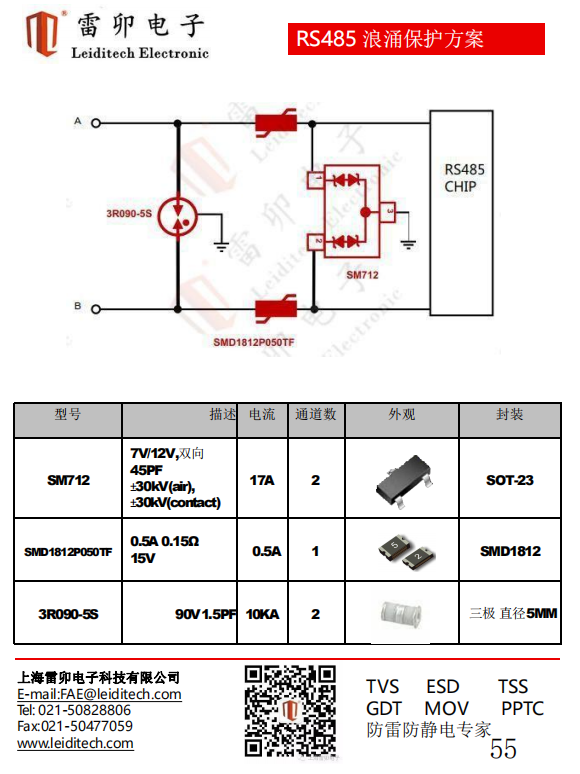
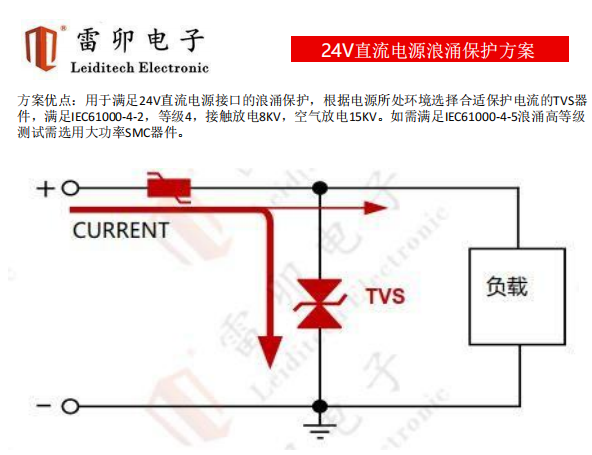
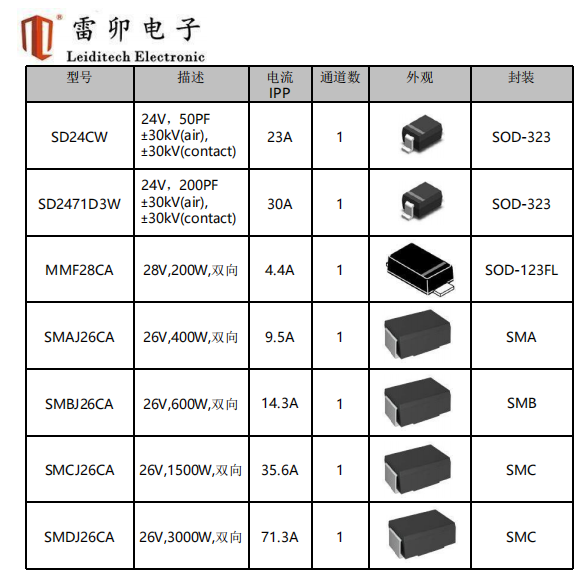
Each unit in the battery management system may have different requirements for anti-static and surge protection. The following are examples of general requirements and design circuit protection schemes:
1. Battery Monitoring Unit (BMU): For anti-static and surge protection, BMU usually needs to have high anti-interference ability. When designing circuit protection schemes, the following measures can be taken:
-Use anti-static protection components, such as static protection diodes or anti-static resistors.
-Add surge protection devices such as TVS diodes at the input/output interface to suppress overvoltage surges.
2. Battery balancing control unit: For anti-static and anti-surge protection, the balancing control unit needs to protect its control circuit and switching components. Here are some examples of protection schemes:
-Use anti-static diodes or resistors on the control signal line to limit electrostatic discharge.
-For switching components, surge protection diodes can be used to suppress reverse voltage surges.
3. Charging and discharging control unit: Charging and discharging control units usually need to have high anti-interference and surge resistance capabilities. Here are some examples of protection schemes:
-Use filter capacitors and filter inductors on the input/output power lines to suppress high-frequency noise and surge voltage.
-Use surge protection devices on power lines to limit overvoltage and surge current.
4. Temperature management unit: The temperature management unit needs to protect temperature sensors and control circuits to ensure their accuracy and reliability. Here are some examples of protection schemes:
-Use anti-static diodes or resistors on the input circuit of the temperature sensor to suppress electrostatic discharge.
-For control circuits, overtemperature protection devices can be used to monitor temperature and trigger corresponding protective measures, such as disconnecting the power supply or issuing an alarm.
5. Fault diagnosis and safety protection unit: The fault diagnosis and safety protection unit needs to protect its circuits and interfaces to ensure the safety and reliability of the system. Here are some examples of protection schemes:
-Use surge protection devices at the input/output interface to limit overvoltage surges.
-For fault diagnosis circuits, overcurrent protection devices or overvoltage protection devices can be used to detect abnormal situations and trigger corresponding protection.
Introduction to Lin Bus and Special Devices for Electrostatic Surge Protection
Leiditech introduced the power configuration of the intelligent gateway
Leave a Reply
Your email address will not be published.Required fields are marked. *